A passport for your owners of valuable objects
How the greatest luxury and fashion houses — Mugler, Rouvenat, Ulé — use the Arianee DPP to provide continuous service to their owners, structure a traceable second-hand market, and prepare for ESPR compliance.
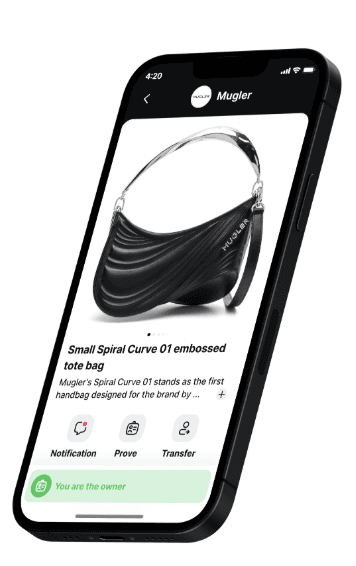
Luxury facing the new owner expectation
Buying a valuable object is no longer a one-off act of consumption — it is the entry into a continuous relationship. Owners expect post-purchase service: access to spare parts and care services, a verifiable history at resale, regulatory compliance that travels with the product. The house that does not know who owns its products loses the most qualified channel it could have.
In parallel, the ESPR (EU Regulation 2024/1781) will require a DPP for textiles from 2026–2030, in addition to the AGEC Act already in force in France. Houses must not only prepare for this compliance but leverage it to strengthen their relationship with an increasingly demanding clientele on sustainability and transparency.
Owner service, second-hand, compliance
Lost owner relationship
After the sale, the house loses direct contact with the person who owns the object. Service opportunities, loyalty and upsell evaporate into the distribution channel.
Fragmented after-sales service
Owners struggle to access care services, spare parts, and intervention history. The house has no consolidated view of how its products are used.
Unstructured second-hand
Without digital transfer, residual value, history and traceability are lost with every ownership change.
Upcoming ESPR compliance
ESPR will require a DPP for textiles from 2026–2030, on top of AGEC already in force. An opportunity to align the compliance tool with an owner service tool.
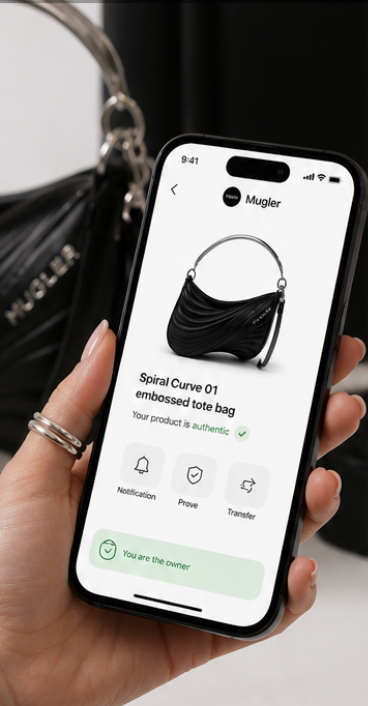
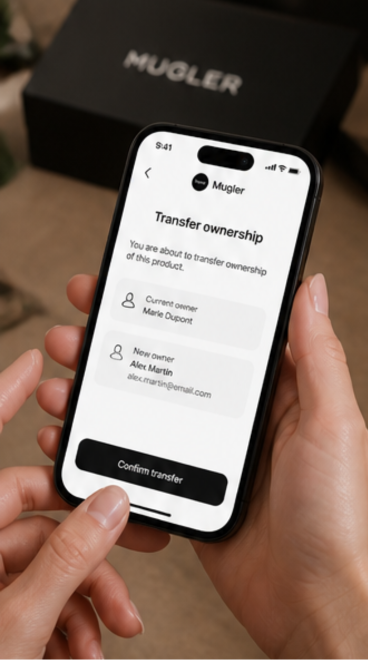
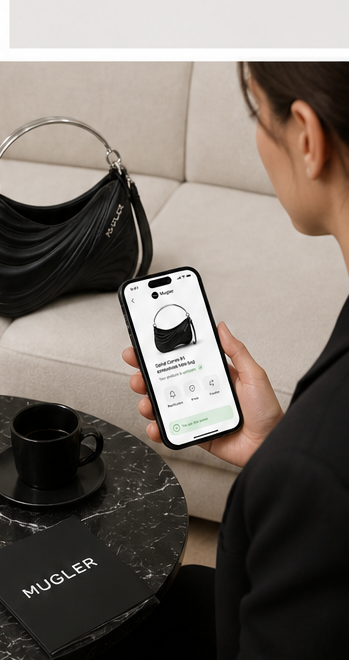
DPP — Owner service, structured second-hand, compliance
Arianee designed a DPP specifically for luxury and fashion. Each product receives a digital passport that accompanies the owner throughout the lifecycle: acquisition, use, care, transfer, regulatory compliance. One infrastructure to serve your owners and cover your ESPR and AGEC obligations.
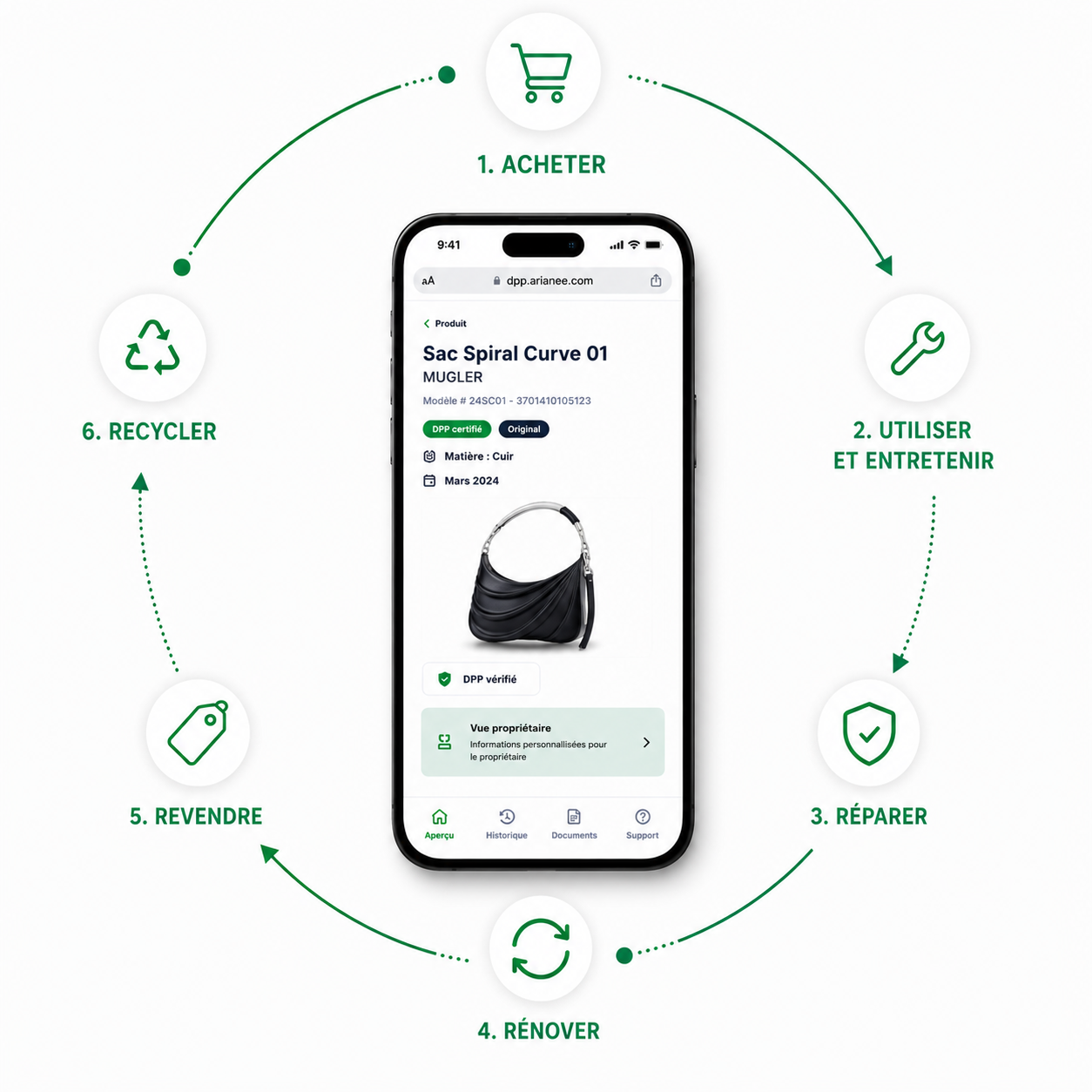
Owner passport activation
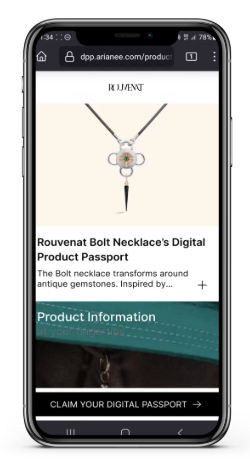
At purchase, each product receives a unique digital passport. The integrated QR or NFC allows the owner to activate their passport with a single scan — no app required.
Continuous owner services
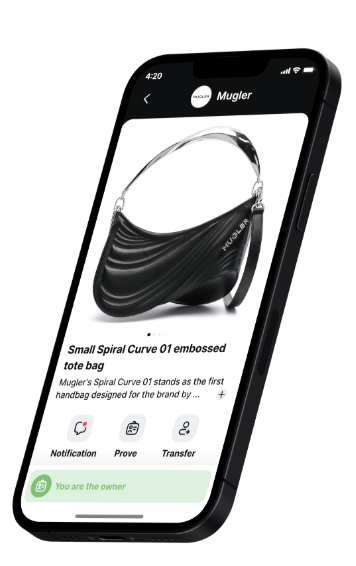
The DPP opens a direct channel between the house and its owner. Exclusive content, care instructions, VIP invitations, after-sales service access, limited edition pre-orders.
Structured second-hand
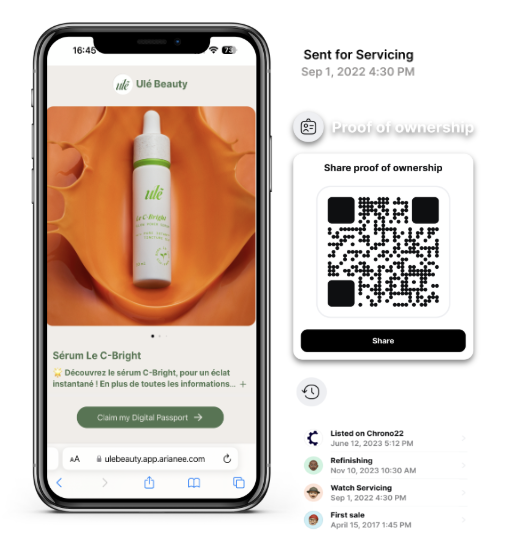
On ownership transfer, the DPP follows the product. The complete history — care, services, successive owners — is preserved. Seller and buyer benefit from verifiable traceability.
ESPR + AGEC compliance
The DPP aggregates the durability, material composition and environmental impact data required by ESPR for textiles (2026–2030) and by the AGEC Act in France. One passport, multiple regulations covered.
Houses in production
Measurable results
Textile compliance
Preparation for future sector-specific ESPR acts
DPPs deployed
Mugler, Rouvenat, Ulé and other houses in production
Transfer to the next owner
Passport and history linked to the product
Second-hand market
History available across ownership transfers
“With Arianee, we built a passport that first serves our owners: after-sales services, transfer at resale, continuous access to the house. ESPR compliance comes as a bonus from this infrastructure. It is a genuine turning point for our customer relationship.”
Digital Director, Mugler
Prestigious Parisian couture house
Ready to serve your owners of valuable objects?
Couture house, jeweller, beauty, leather goods — we guide you through DPP deployment from compliance to owner service.