Battery passport for electric and hybrid vehicles
The most visible segment of the Regulation, and the most demanding in volume: 46 mandatory data points on 18 February 2027, a unique identifier per battery, and a state of health that must stay current for the whole life of the vehicle.
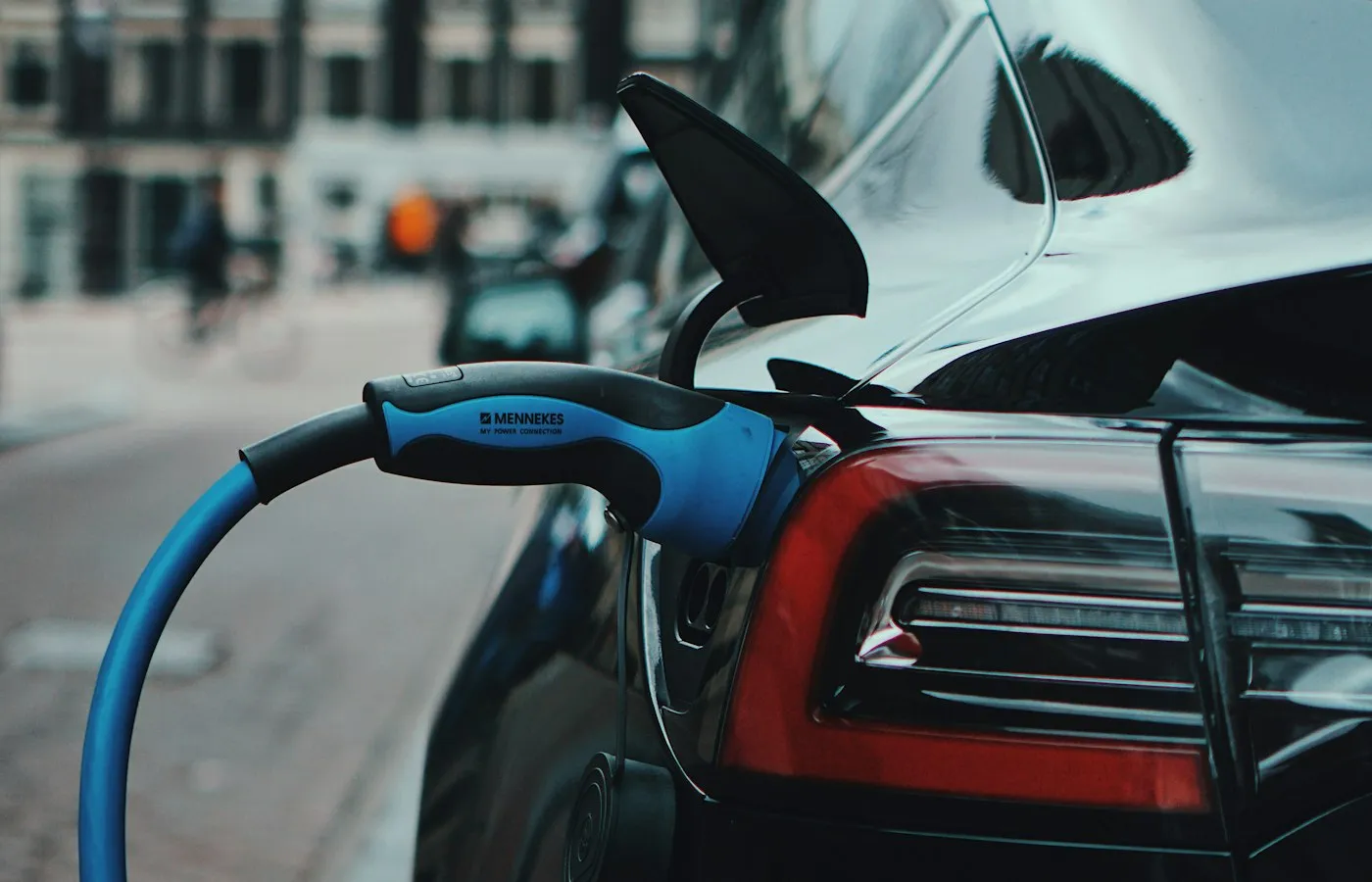
Electric vehicle battery — 46 of 71 data points mandatory
on 18 February 2027
Article 3 of Regulation (EU) 2023/1542 defines an electric vehicle battery as a traction battery for a vehicle of category M, N or O, or for a category L vehicle where it weighs more than 25 kg. Batteries in electric and plug-in hybrid passenger cars and vans therefore fall under this regime, whatever their capacity.
Applicable threshold. No capacity threshold for electric vehicle batteries: the criterion is the vehicle category, not the size of the pack. A small plug-in hybrid battery is covered exactly as a 100 kWh pack is.
Source: Regulation (EU) 2023/1542 and the European Commission guidance document "Digital Batteries Passport – data points by category", version 2.0 of 15 August 2026, which lists 71 data points and their applicability by battery category.
What is in scope, and what is not
Subject to the passport
- Traction batteries in electric and plug-in hybrid passenger cars
- Traction batteries in category N1 light commercial vehicles
- Replacement and refurbished packs placed on the market after 18 February 2027
Out of scope
- Starting, lighting and ignition (SLI) batteries: outside the scope of Article 77, though still subject to labelling obligations
- Ancillary and accessory batteries falling under the portable battery regime
What you actually have to produce on 18 February 2027
Not every data point in the passport is due when it opens. The Commission guidance distinguishes, for each battery category, what is mandatory at the deadline from what is still waiting for its legal framework. Scoping the project against the full list means over-investing; ignoring the distinction means rebuilding in two years.
Mandatory at the deadline
- ✓Unique battery identifier, data carrier and economic operator identifier
- ✓Manufacturer, model, date and place of manufacture of the pack
- ✓Cell chemistry, critical raw materials and hazardous substances
- ✓Rated capacity, energy, power, voltage and expected service life
- ✓State of health, state of charge and usage history — mandatory, but restricted to legitimate interested parties rather than public
- ✓Disassembly instructions and end-of-life information
Not yet due — and why
- ○Carbon footprint declaration and the associated label: the delegated act setting the calculation methodology, consulted on in 2024, has not been adopted; the obligation will apply twelve months after it enters into force
- ○Carbon footprint performance class, then maximum threshold: both later than the declaration, and dependent on the same act
- ○Responsible sourcing information: the Article 48 due diligence obligation is postponed to 18 August 2027 by Regulation (EU) 2025/1561
Also worth tracking: supply chain due diligence obligations (Article 48), postponed to 18 August 2027 by Regulation (EU) 2025/1561, with an exemption for companies with a turnover below EUR 40 million.
Where the data comes from in this sector
The hard part of a Battery Pass project is almost never the passport itself: it is knowing who holds each piece of data, how often it changes, and who is entitled to read it. Article 77 and Annex XIII impose tiered access — not every mandatory data point is public.
| Data | Who holds it | Frequency | Access |
|---|---|---|---|
| Pack identifier, chemistry and bill of materials | Manufacturer and cell maker, through the PLM | At creation | Public |
| Capacity, energy, power, service life | Manufacturer type-approval testing | At creation | Public |
| Test reports and conformity documentation | Notified bodies | At creation | Authorities |
| State of health, state of charge, cycles | Vehicle BMS, relayed by manufacturer telematics | Continuous | Interested parties |
| Interventions and module replacement | After-sales network and independent repairers | Per intervention | Interested parties |
| Disassembly and depollution instructions | Manufacturer, with the authorised treatment facility | At creation | Public |
How state of health gets in when the battery is not connected
State of health is the only passport data that has to stay alive after the battery is placed on the market. The market talks about connecting to the BMS as if it were a given — it is not: most batteries in service report nothing continuously. Three routes coexist, and on this segment it is bms connection that is the realistic default.
The BMS reports state of health continuously, through vehicle telematics or site supervision. The finest-grained option, but it assumes connected equipment and a data flow that already exists.
The default: manufacturer telematics report state of health, state of charge and cycle count across the running fleet.
With Arianee — Event-based write API: each reading updates the passport of the battery concerned, with no re-issuance, timestamped and attributed to its source.
Readings are extracted periodically from an existing system — supervision, fleet management, connected chargers, ERP — and loaded in batches. The realistic route when the data exists but is not exposed in real time.
For batches leaving the plant and for unconnected vehicles, or to backfill history from after-sales systems.
With Arianee — Bulk import from the Management Hub or by API: one file or feed updates thousands of passports in a single operation, with a per-line error report.
The technician scans the battery's QR code and enters or confirms the reading on the spot — in the workshop, in store, in the plant room. The only route when the battery is not connected, and the most reliable evidence that an intervention took place.
In the dealer network and at independent repairers: scanning the pack opens the passport and documents the diagnosis and the intervention.
With Arianee — Passport Portal: the scan opens the battery's passport with the technician's rights, and they write their reading and their intervention. Works for a network of third-party workshops without opening the rest of the fleet to them.
The three routes feed the same passport and are not mutually exclusive: a mixed estate usually combines a BMS feed on recent equipment, a batch import for the installed base, and a field reading for anything that comes through the workshop. Every write is timestamped and attributed to its source, which is what makes the history hold up under inspection.
The three hard parts specific to this sector
State of health is mandatory but not public
This is the trickiest design point. State of health, state of charge and usage history are among the mandatory data, but Annex XIII restricts them to legitimate interested parties — repairers, refurbishers, end-of-life operators — and to the authorities. The passport therefore needs a role-based permission model, not a simple public QR code.
Volume and automation
A manufacturer places hundreds of thousands of batteries on the market every year. Passport creation can only be an automated flow from production systems, pulling in cell maker data and validating before issuance.
The pack changes hands several times
The vehicle is resold, the battery may be replaced, refurbished, then redeployed into stationary storage. The passport has to follow the battery through those transfers and stay writable by actors who are neither the manufacturer nor the first owner.
What the passport gives you beyond compliance
A battery passport reduced to an obligation stays a cost. The same data, properly structured, serves operations and the residual value of the fleet.
Residual value on the used market
Uncertainty about battery condition weighs on used EV prices. A documented, verifiable state of health, accessible to the repairer and the buyer, turns an unknown into an argument for value.
Second life and refurbishment
A removed pack can go into stationary storage if its history can be proven. Without a passport, doubt forces direct recycling and destroys the residual value.
After-sales and repairability
Giving authorised or independent repairers access to disassembly data and pack history shortens diagnosis and records each intervention in the passport.

François Pujo
Industrial & Battery Project Manager
François is our Battery Pass expert, working alongside industrial players worldwide to integrate DPP into their production lines and across the entire life of the product.
Frequently asked questions — Passenger EVs
Which automotive batteries are covered by the passport on 18 February 2027?+
Traction batteries in electric and plug-in hybrid vehicles of categories M, N and O, with no capacity threshold. Starting, lighting and ignition (SLI) batteries are outside the scope of Article 77: they remain subject to labelling and collection obligations, but have no passport.
How many data points must an electric vehicle battery carry?+
The European Commission guidance of 15 August 2026 lists 71 data points for the battery passport. For electric vehicle batteries, 46 of them are mandatory on 18 February 2027. The remainder correspond to obligations whose legal framework is not yet complete, chiefly carbon footprint and responsible sourcing.
Will the battery's state of health be public?+
No. State of health, state of charge and usage history are mandatory passport data, but Annex XIII of the Regulation restricts them to legitimate interested parties — repairers, refurbishers, end-of-life operators — and to market surveillance authorities. The general public gets battery identification, composition and end-of-life information, not usage data.
Must the carbon footprint appear in the passport from 2027?+
Not as things stand. Article 7 provides for a carbon footprint declaration for electric vehicle batteries, but its application depends on a delegated act setting the calculation methodology entering into force. That text, put out for public consultation in 2024, has not been adopted to date. The declaration will become due twelve months after it enters into force.
What happens to the passport when the battery is refurbished or given a second life?+
The passport follows the battery. Article 77 provides that it ceases to exist once the battery is recycled: for as long as the battery is reused, repurposed or refurbished, the passport remains in force and must continue to be updated by whoever is responsible at that stage of the life cycle.